Notable brethren of Star in the East
More than a thousand men have belonged to Lodge Star in the East since 1879, most of them merchants, engineers and, after 1945, servicemen. A few left a mark on the history of Japan and of the lodge itself.
Most of the lodge’s early records were destroyed when the Masonic Hall collapsed and burned in the Great Kanto Earthquake of 1923, and more were lost in the war.1 What we know about individual members comes from the charter, the few papers that survived, newspaper reports, and the histories written by the lodge and its District Grand Lodge. This article is about the men those sources let us see clearly. Many others, equally deserving, are now only names on the Roll.
The founders, 1879
Twenty-three Master Masons signed on as founders of Star in the East. They had been made Masons in lodges across the world: seven came from the Scottish lodge in Kobe, Hiogo and Osaka No. 498, many from the English lodges already working in Japan, and others from lodges in New York, Brooklyn, Oregon and Nova Scotia.3 It was a fair picture of the foreign settlement at Yokohama twenty years after the port opened.
At the inauguration on 16 September 1879, Edward Fischer, a member of No. 498, was installed as the first Right Worshipful Master by A. S. Fobes, a Past Master of the Kobe lodge.4 The lodge’s historian Duncan MacPherson wrote that most of its first office-bearers “were notable men of their day, who played a significant part in the modernization of Japan”.1
Durham White Stevens (1851–1908)
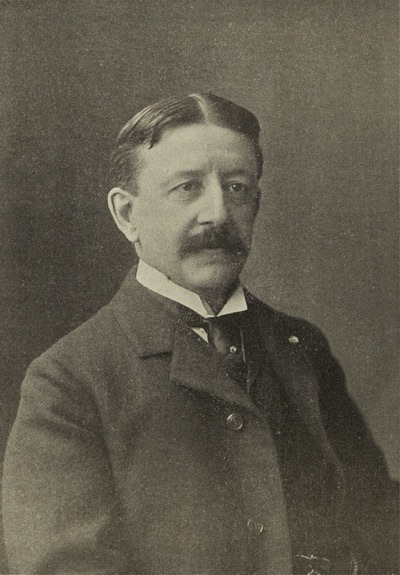

The first Substitute Master was Durham White Stevens, an American who had joined from Nippon Lodge No. 1344 of the English Constitution.3 4 Stevens had come to Tokyo in 1873 as secretary of the United States Legation. In 1883 he left the American service for that of the Japanese government. He served as English Secretary at the Japanese Legation in Washington and later in the Foreign Office in Tokyo, and was awarded the Order of the Rising Sun for his work in negotiations with Korea in 1884–85.
In November 1904 Japan placed him in Seoul as adviser to the Korean Foreign Office, where he became closely identified with the Japanese protectorate over Korea. On a visit to the United States in March 1908 he gave interviews defending Japanese rule in Korea. On 23 March, at the ferry terminal in San Francisco, he was shot by the Korean independence activist Jang In-hwan, and he died two days later.6
Adolfo Farsari
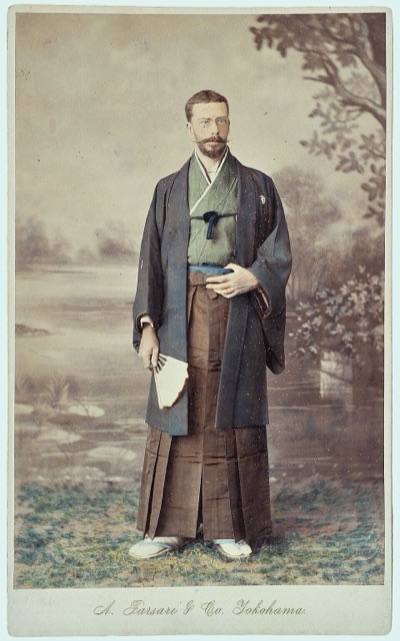

Another founder was Adolfo Farsari, who had been made a Mason in Brooklyn, New York.3 He was almost certainly the Italian-born Adolfo Farsari (1841–1898), who served as a cavalryman with a New York volunteer regiment in the American Civil War and settled in Yokohama in 1873. In the 1880s he became one of the best-known photographers in Japan. His studio’s hand-coloured prints of Japanese landscapes and people were bought by visitors from all over the world, and helped shape how the West saw Meiji Japan.7
The war years
A meeting of the lodge was set for 9 December 1941. War broke out the day before, the charter was confiscated, and members who were citizens of enemy nations were interned.2 5
Michael Apcar
Michael Apcar had been Right Worshipful Master in 1928 and was the lodge’s Treasurer in 1941. He was arrested on 8 December 19418 and, by the District’s account, “subjected to continuous interrogations over a period of months” before being consigned to solitary confinement. He was held for more than fourteen months in all, and divulged nothing about the Craft.2
In November 1945, speaking from memory to Masons of the Occupation forces in Yokohama, Apcar described twelve days of torture and appealed to his listeners to help the lodges of Japan “unfurl our banners” again.8 In 1948 the Grand Master Mason of Scotland appointed him Honorary Junior Grand Deacon in recognition of his services. He later retired to the United States.2
Dr Carlos Rodríguez-Jiménez
The Secretary in 1941 was Dr Carlos Rodríguez-Jiménez, Consul-General of Venezuela, and by chance the minute book was at his home when war began. Using his diplomatic status he kept it from confiscation, sealed it with other lodge papers, and was allowed to take the packages with him when he was evacuated on the exchange ship MS Gripsholm in 1942.2 5 He could not save the charter or the attendance book.
Rodríguez-Jiménez went on to a remarkable Masonic career. He was Grand Master of the Grand Lodge of Venezuela in 1947, and when the Grand Lodge of Japan was formed in 1957, he was its first Grand Master.2
Joseph L. McSparran and the meeting at sea
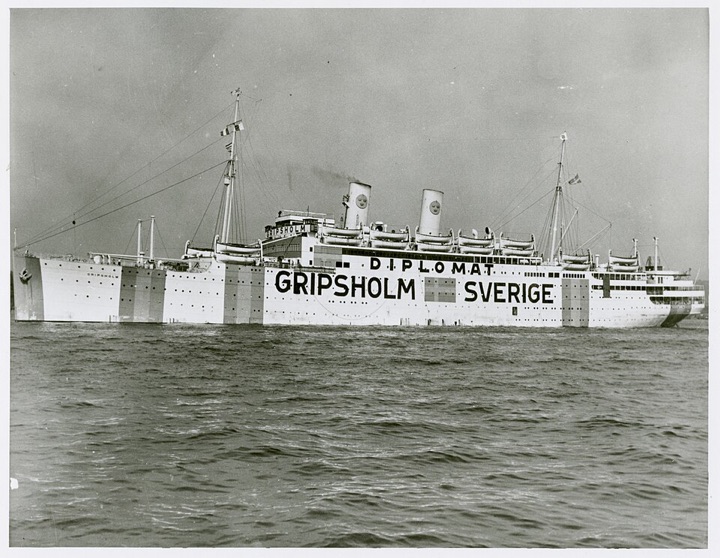

Joseph McSparran, the reigning Master, was repatriated on the Gripsholm with the Secretary and seven other members. He was the only installed Master of the Scottish Constitution on board. On 8 August 1942, with the ship under way, he assumed the authority of a District Deputy Grand Master, granted a dispensation and opened the lodge in a cabin.5 The minutes survive. A photograph of the brethren on board names Denis Kildoyle, F. F. Booth, Carlos Rodríguez, E. L. Vest, John Rust, R. Child, Joseph McSparran, Peter Kipp and R. W. Burrel.
The Occupation commanders
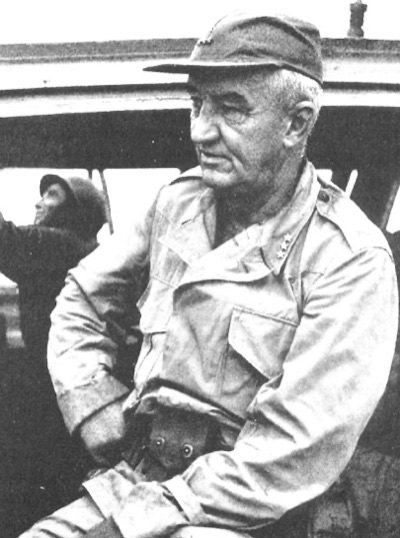

The lodge resumed work on 9 April 1946, the first lodge in Japan to do so. It met in the Bluff Temple, which had been confiscated and left to decay during the war. The building was restored through the efforts of Lieutenant General Robert L. Eichelberger, commander of the US Eighth Army and himself a Freemason.2
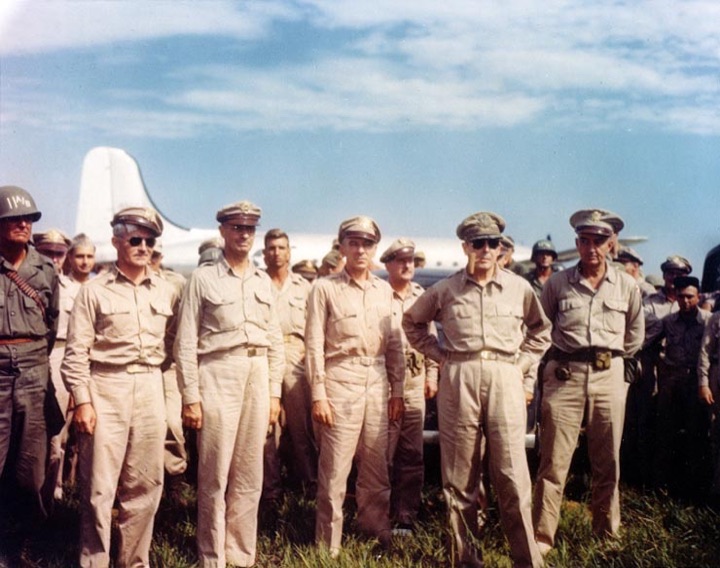

In the busy year that followed, as dozens of servicemen applied to join, the brethren made Eichelberger and General Douglas MacArthur, Supreme Commander for the Allied Powers, honorary members of the lodge by acclamation. MacArthur had been made a Mason “at sight” by the Grand Master of the Philippines in Manila on 17 January 1936, a rare privilege, and was a member of Manila Lodge No. 1.9
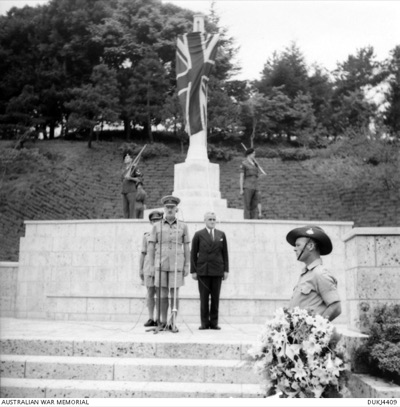

In January 1947 the lodge elected Lieutenant General H. C. H. Robertson to honorary membership. Sir Horace Robertson, an Australian, commanded the British Commonwealth Occupation Force from 1946 to 1951.10 In MacPherson’s words, “thus the three leaders of the Allied Occupation forces entered the fold of Star in the East”.1
Rebuilding after the war
The work of rebuilding fell to members who stayed for the long term. Harvey Colton, Master in 1929, made contact with McSparran while in the United States and brought the old minute book home to the lodge’s archives. The lodge joined the Scottish District that became the District Grand Lodge of the Far East in May 1958, and that September George W. Colton was appointed Superintendent for Japan. He became Depute District Grand Master in 1959. Both Coltons, and J. Levy, received honorary Grand rank from Edinburgh for their service.2
The lodge’s history page tells the rest of the story, from the Bluff Temple to Midorigaoka.
A note on sources
This article relies on the lodge’s own history, the 1961 history of the District Grand Lodge of the Far East, and Duncan MacPherson’s history of Freemasonry in Japan, all transcribed in the archive at star.skirret.com and skirret.com. We have not named a man as a member of the lodge unless one of those sources does so. Several better-known figures of Meiji Yokohama were Freemasons, but we have found no evidence that they belonged to Star in the East, so they do not appear here. If you have documents, photographs or family knowledge of a member of the lodge, please write to the Secretary.
The photographs on this page are in the public domain, as works of the United States and Australian governments or because of their age. Each caption links to its source on Wikimedia Commons.
Notes
- Duncan T. MacPherson, “A Brief History of Freemasonry in Japan”, Year Book of the Grand Lodge of Antient Free and Accepted Masons of Scotland (2005).
- A Brief History of the District Grand Lodge of the Far East (Hong Kong, 1961), section on Lodge Star in the East No. 640.
- List of founder members submitted to the Grand Lodge of Scotland, Lodge 640 history, part 4.
- Officers at the inauguration, 16 September 1879, Lodge 640 history, part 3.
- The war years and the Gripsholm meeting, Lodge 640 history, part 8.
- “Durham Stevens”, Wikipedia, and the sources cited there.
- “Adolfo Farsari”, Wikipedia, and the sources cited there.
- Address by Bro. Apcar at the meeting of the Tokyo Bay Masonic Club, Yokohama, 22 November 1945.
- Grand Lodge of British Columbia and Yukon, “Douglas MacArthur”; Grand Lodge of the Philippines, history, 1919–2006.
- “Horace Robertson”, Wikipedia, and the sources cited there.